I spent most of my early twenties convinced that if I just bought the right $30 leather-bound planner or downloaded that one “aesthetic” productivity app, my life would suddenly stop feeling like a chaotic mess. I was wrong. Most of the advice you see online about how to plan your day is just glorified procrastination—it’s more about the feeling of being organized than actually getting things done. I’ve watched people spend three hours color-coding a calendar only to end the day feeling completely burnt out and behind schedule. It’s performative, it’s exhausting, and frankly, it’s a waste of your mental bandwidth.
I’m not here to sell you on a lifestyle overhaul or a complicated ritual that requires a PhD in systems engineering to maintain. Instead, I want to show you how to build a low-friction system that actually survives contact with reality. We’re going to strip away the fluff and focus on a few pragmatic, no-nonsense tactics that help you reclaim your time without turning your life into a full-time job of managing your to-do list. Let’s get to work.
Table of Contents
Ditching the Chaos With Real Time Management Techniques

Look, most people treat their to-do list like a graveyard of good intentions. You write down twenty things, realize you can only actually do five, and then spend the rest of the day feeling like you’ve failed. That’s not a productivity problem; it’s a system failure. Instead of chasing every shiny new app, I’ve found that the most effective time management techniques are usually the ones that require the least amount of friction. I’m a big believer in the “Rule of Three.” Pick three non-negotiable tasks that must happen today. Everything else is just a bonus.
When I’m feeling particularly overwhelmed, I lean heavily into prioritizing daily tasks using the Eisenhower Matrix—basically sorting stuff into “urgent” and “important” buckets. It sounds academic, but in practice, it just stops me from spending three hours tweaking my mechanical keyboard switches when I should be finishing a spreadsheet. You don’t need a complex digital dashboard to get things done. You just need a way to separate the signal from the noise. Stop trying to optimize every single minute of your life and just focus on protecting your deep work windows. That’s where the real progress happens.
How to Create a Daily Schedule That Actually Sticks
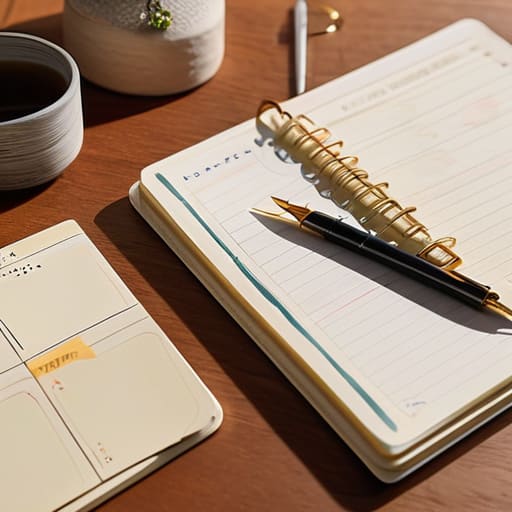
Look, the reason most people fail at building a schedule is that they treat it like a rigid contract rather than a living document. You sit down on Sunday night, map out every single minute from 6:00 AM to 10:00 PM, and then—inevitably—life happens. A meeting runs long, your coffee spills, or you just hit a wall of mental fatigue. When you deviate from that “perfect” plan, you feel like you’ve failed, so you scrap the whole thing.
To actually make progress, you need to stop aiming for precision and start focusing on prioritizing daily tasks based on energy, not just clock time. I’ve found that my most effective productivity hacks for daily routine involve grouping tasks into “energy buckets.” Instead of a massive to-do list, I pick three non-negotiables. Everything else is a bonus. This way, even if the day goes sideways, you know exactly what moved the needle.
When you’re figuring out how to create a daily schedule that survives contact with reality, build in “buffer blocks.” These are intentional gaps of 15 to 30 minutes between major tasks. It sounds counterintuitive to schedule nothing, but those gaps are what prevent a single delay from triggering a total systemic collapse. It’s about building a system that is resilient to chaos, not one that pretends chaos doesn’t exist.
My Non-Negotiable Rules for a Functional Day
- Stop overstuffing your to-do list. I used to write down twenty things and feel like a failure when I only did five. Now, I pick three “must-wins” for the day. If I hit those, the day is a success. Everything else is just a bonus.
- Use “Time Blocking,” but leave breathing room. Don’t schedule your day down to the minute like a machine. I block out chunks for deep work, but I always leave 30-minute gaps for the inevitable “quick questions” or the random chaos that life throws at you.
- Eat the frog first thing. My brain is sharpest in the morning and starts to lag by 3 PM. I tackle my hardest, most annoying task immediately. Once that’s out of the way, the rest of the day feels like I’m coasting.
- Do a “Brain Dump” every evening. I keep a physical notebook by my bed for a reason. Before I shut down for the night, I write down every lingering thought or task swirling in my head. It clears my mental RAM so I can actually sleep without my brain trying to solve engineering problems at 2 AM.
- Audit your energy, not just your time. Some tasks require high-level focus, like analyzing data or writing reports, while others are mindless, like clearing out my inbox. Don’t try to do heavy lifting when you’re in a post-lunch slump. Match the task to your vibe.
Stop Overthinking, Start Executing
Look, we’ve covered a lot of ground here. We talked about moving past the chaotic “to-do list” trap and actually building a schedule that accounts for how you actually function, not how some productivity guru says you should. We looked at time management techniques that respect your energy levels and the importance of building a routine that is flexible enough to survive a bad day. The goal isn’t to turn yourself into a high-performance machine that never breaks; it’s about setting up a framework where you aren’t constantly playing catch-up. At the end of the day, it all comes down to stripping away the noise and focusing on the few tasks that actually move the needle.
If you walk away with nothing else, remember this: your system is allowed to evolve. If a specific method feels like a chore or starts making you feel more burnt out than organized, toss it out. I still keep my pocket notebook because sometimes a digital app just feels too heavy when I’m trying to clear my head. Don’t let the pursuit of the “perfect” system become just another way to procrastinate. We aren’t aiming for a flawless, robotic existence; we’re just trying to build a life that feels a little more intentional and a lot less overwhelming. Just start small, stay consistent, and let the rest fall into place.
Frequently Asked Questions
What do I do when my "perfect" plan falls apart halfway through the afternoon?
First, stop beating yourself up. I’ve been there—usually around 2:00 PM when a “quick” meeting turns into a two-hour fire drill. When the plan breaks, don’t try to force the old schedule back together; that’s how you end up paralyzed. Just grab your notebook, do a quick brain dump of what’s left, and pick the one most important thing to finish. Forget the perfection. Just pivot and reset for tomorrow.
How much time should I actually spend planning versus just getting to work?
Look, I’ve spent way too many hours tweaking Notion templates instead of actually doing the work. That’s just productive procrastination. My rule of thumb? Keep the planning phase to 10 or 15 minutes max. If you’re spending an hour “organizing” your tasks, you’re not planning; you’re hiding. Use a quick brain dump in your notebook, pick your three non-negotiables, and then close the app. The goal is to start working, not to win an award for scheduling.
Should I be using a digital calendar for everything, or is there a place for pen and paper?
Honestly? Use both, but for different things. I use my digital calendar for the “hard” stuff—appointments, meetings, and anything with a specific timestamp. It’s non-negotiable for reminders. But for my actual brain dump and daily priorities, I grab my pocket notebook. There’s something about the tactile friction of pen on paper that helps me process tasks without the constant ping of notifications. Digital for the schedule; analog for the focus.
How do I stop my to-do list from becoming an endless, overwhelming mountain of tasks?
The problem isn’t your list; it’s that your list is a graveyard for every “maybe one day” thought you’ve ever had. To fix this, I use a “Daily Three” rule. Every morning, I pick exactly three non-negotiable tasks from my master list. Everything else stays in the backlog. If it’s not one of those three, it doesn’t exist for today. Stop treating your to-do list like a wish list and start treating it like a contract.