I spent three years of my life chasing the “ultimate” productivity setup, convinced that if I just found the right app or the perfect color-coded template, my brain would finally stop feeling like a browser with fifty tabs open. I bought the expensive planners, downloaded the subscription-based task managers, and spent more time organizing my life than actually living it. Most of the to do list tips you see online are just sophisticated ways to procrastinate under the guise of “optimization.” They promise a frictionless life, but they usually just add more digital noise to an already loud world.
I’m not here to sell you on a complex workflow or a premium piece of software that requires a PhD to operate. Instead, I want to share the stripped-back, systems-based approach I use to keep my head above water as an analyst. I’m going to give you a few practical, no-nonsense strategies that focus on reducing mental load rather than increasing complexity. We aren’t looking for a perfect aesthetic; we are looking for systems that actually work so you can stop managing your tasks and start finishing them.
Table of Contents
Digital vs Paper Planners Finding Your Path of Least Resistance
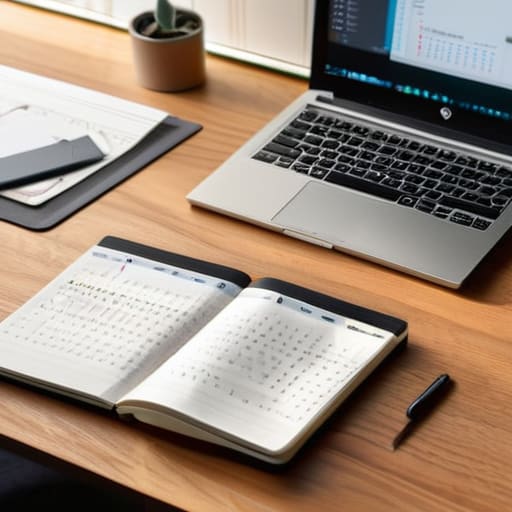
I’ve spent way too many hours oscillating between high-end productivity apps and the tactile satisfaction of a fresh notebook. It’s the classic digital vs paper planners debate, and honestly? Most people get it wrong by trying to pick the “best” one instead of the one they’ll actually use. If you’re someone like me—constantly switching between a laptop for work and a physical notebook for brain dumps—you know that the friction of a tool is what kills your momentum. Digital tools are incredible for syncing across devices and setting reminders, but they also come with a massive side effect: the endless temptation to check a notification.
On the flip side, there’s something about the physical act of crossing a line through a task that hits differently. It’s a psychological win that an app can’t quite replicate. However, if you’re using a paper planner but constantly losing it under a pile of mail, you aren’t actually helping yourself. My rule of thumb is to find your path of least resistance. If you need speed and automation, go digital. If you need to disconnect from the screen to actually focus, go analog. The goal isn’t to have the prettiest setup; it’s to build a system that doesn’t feel like another chore on your list.
Productivity Hacks for Task Management Without the Extra Noise
Once you’ve decided on your medium—whether it’s a sleek app or a battered Moleskine—the real work begins. Most people fail because they treat their list like a “wish list” rather than a roadmap. They write down twenty things, feel overwhelmed by noon, and end up doomscrolling instead. To stop this, I rely heavily on prioritization methods like the Eisenhower Matrix. It sounds fancy, but it’s just a way to force yourself to distinguish between what’s actually urgent and what’s just loud. If a task doesn’t move the needle, it shouldn’t be taking up prime real estate on your daily view.
I’m also a huge advocate for integrating time blocking techniques into your workflow. A list tells you what to do, but it doesn’t tell you when you’re actually going to do it. Without a dedicated block of time, a task is just a suggestion. When I’m tackling a heavy project, I carve out a non-negotiable hour in my calendar. This creates a mental container that helps with overcoming procrastination with lists because the decision-making is already done. You aren’t staring at a blank screen wondering where to start; you’re just following the schedule you already built.
Five Ways to Stop Managing Tasks and Start Actually Doing Them
- Stop the “Infinite List” trap. If your to-do list has 40 items on it, you haven’t made a plan; you’ve just made a list of things to feel guilty about. Every night, pick your “Big Three”—the three non-negotiables that actually move the needle—and ignore the rest until those are done.
- Use the “Two-Minute Rule” to clear the mental clutter. If a task pops up that takes less than 120 seconds—like replying to a quick Slack message or filing a receipt—do it immediately. Don’t let these tiny micro-tasks clog up your formal list and take up precious mental bandwidth.
- Time-block your heavy lifting. A list tells you what to do, but it doesn’t tell you when. I’ve found that assigning specific time slots in my calendar for my hardest tasks prevents that mid-afternoon “decision paralysis” where you spend an hour just trying to decide where to start.
- Build in “Buffer Zones.” One of the biggest mistakes I made early in my career was scheduling tasks back-to-back like a machine. Life happens. Meetings run over. If you don’t build in 15-30 minute gaps between major tasks, one small delay will wreck your entire system for the day.
- Perform a weekly “System Reset.” Every Sunday evening, I grab my notebook and do a brain dump of everything swirling in my head. I look at what I missed last week, what’s coming up next, and what I can actually delete. If you aren’t auditing your list, you’re just collecting digital debt.
The Bottom Line
Look, we’ve covered a lot of ground, from choosing between the tactile feel of a paper notebook and the seamlessness of a digital app, to stripping away the “productivity theater” that usually just ends up wasting more of your time. The takeaway is simple: whether you’re using a high-tech task manager or a messy pocket notebook, the tool doesn’t matter as much as the consistency of the system. You don’t need a complex, multi-layered workflow to be effective; you just need a way to offload your mental clutter so you can actually focus on the work in front of you. Stop looking for the perfect setup and just start with something that works for your current reality.
At the end of the day, your to-do list is supposed to serve you, not the other way around. If your system feels like a second job, it’s broken. I spent way too long in my early twenties trying to optimize every single minute of my day, only to realize that true productivity is about having the mental bandwidth to actually enjoy your life when the work is done. Don’t let the pursuit of an optimized life become another source of burnout. Build a system that is good enough, let it carry the heavy lifting for you, and then go live your life.
Frequently Asked Questions
How do I stop my to-do list from becoming a massive, overwhelming graveyard of tasks I'll never actually finish?
The problem is you’re treating your list like a wish list instead of a battle plan. When everything is a priority, nothing is. Stop dumping every random thought into one giant pile. Instead, try “The Rule of Three”: every morning, pick exactly three non-negotiable tasks. Everything else goes into a separate “backlog” folder. This keeps your daily view clean and stops that sinking feeling of staring at a list of fifty things you’ll never touch.
Is there a way to balance a digital list for work with a physical notebook for my personal life without losing my mind?
The trick is to stop treating them like two competing systems and start treating them like two different modes of existence. Use your digital tools for the “heavy lifting”—deadlines, recurring work tasks, and things that need reminders. Use your notebook for the “mental bandwidth”—brain dumps, personal goals, and daily intentions. If you try to sync every tiny grocery item to your work app, you’ll burn out. Keep them separate to keep your head clear.
How do I figure out which tasks are actually important versus just the ones that feel "loud" or urgent?
This is the “Urgency Trap,” and it’s a productivity killer. We tend to mistake a pinging notification for a priority. To fix this, I use a simple filter: Ask yourself, “If I don’t do this today, what actually breaks?” If the answer is “nothing, I’ll just feel guilty,” it’s just noise. Categorize tasks by impact, not volume. Focus on the quiet, high-leverage work that moves the needle, even if it doesn’t scream for attention.
At what point does "organizing" my tasks actually become a form of procrastination?
It becomes procrastination the second you start prioritizing the setup over the execution. If you’re spending two hours color-coding Notion databases or hunting for the “perfect” aesthetic planner instead of actually tackling your most important task, you’re not being productive—you’re just performing “productive procrastination.” It feels like work, but it’s actually just a way to avoid the friction of real effort. If the system is getting in the way of the work, scrap it.