I was sitting at my desk last Tuesday, mid-way through a deep-work session, when I realized I’d spent the last forty minutes scrolling through mindless tech threads instead of actually finishing my sprint report. My eyes felt gritty, my neck was tight, and that familiar, hollow sense of digital fatigue had set in. It’s that frustrating loop where you know you need to disconnect, but the device in your hand feels like an extra limb you can’t quite shake. Most people will tell you that learning how to lower screen time requires a complete digital detox or some expensive, high-tech “minimalist” phone, but honestly? That’s just more noise.
I’m not here to sell you on a lifestyle overhaul that leaves you feeling isolated and disconnected from the world. Instead, I want to share the low-friction systems I’ve built to reclaim my focus without making my life feel like it’s stuck in 1995. We’re going to skip the guilt-tripping and the complex “wellness protocols” and focus on practical, engineering-minded tweaks that actually stick. My goal is to help you build a relationship with your tech that serves you, rather than one where you’re constantly fighting an uphill battle against your own notifications.
Table of Contents
Spotting the Smartphone Addiction Symptoms Early

Before we can build a better system, we have to be honest about where the leaks are. I used to think I was just “staying connected,” but looking back through my data, I realized I was actually just reacting to every ping and buzz. One of the biggest red flags for smartphone addiction symptoms isn’t just the total hours logged; it’s that phantom vibration feeling or the immediate, reflexive reach for your phone the second you hit a moment of boredom. If you find yourself scrolling through mindless feeds while waiting for a coffee or sitting in an elevator just to avoid a moment of silence, your brain is likely seeking a cheap dopamine hit to escape the present.
Another subtle sign is how your tech affects your physical state. I noticed a huge shift in my own energy when I realized the blue light impact on sleep was making my rest feel shallow and unrefreshing. If you’re waking up feeling groggy despite eight hours of shut-eye, or if you feel a sense of low-level anxiety when your battery hits 10%, your relationship with your device has moved from tool to master. Recognizing these patterns isn’t about shaming yourself; it’s about gathering the data we need to start building better digital wellbeing habits.
Setting Screen Time Limits That Actually Stick
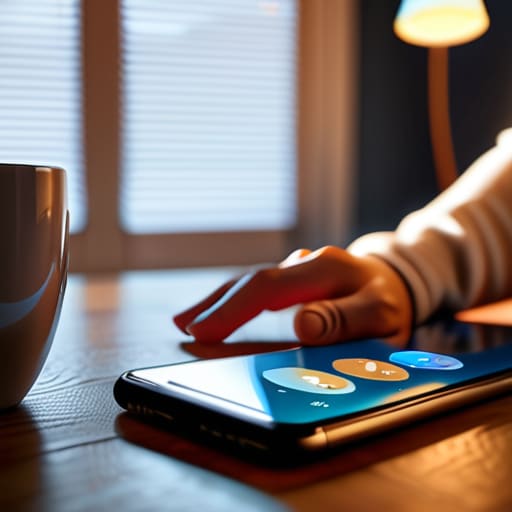
Most people try to fix their relationship with their phone by setting a hard limit of “two hours a day” and then immediately failing by lunchtime. That’s a recipe for burnout. If you treat your phone like a strict diet, you’re just going to end up binge-scrolling at midnight out of pure frustration. Instead, I’ve found that setting screen time limits works way better when you focus on friction rather than just willpower. If you want to stop the mindless loops, make it harder to access the junk. Move your most addictive apps off your home screen and hide them in a folder on the last page of your phone. If you have to work to find Instagram, you’ll stop opening it reflexively.
Another thing that’s changed the game for me is creating “no-go zones” for my devices. I don’t just set a timer; I set physical boundaries. For instance, my phone doesn’t enter my bedroom after 10 PM. This isn’t just about discipline; it’s about mitigating the blue light impact on sleep so my brain actually has a chance to wind down. When you stop treating your phone as a constant companion and start treating it as a tool you pick up only when needed, you start to see the real benefits of unplugging. It’s about building systems, not just making rules.
Low-Effort Systems to Protect Your Brain
- Kill the red dots. Go into your settings and turn off every single non-human notification. If it’s not a text or a call from a real person, you don’t need a buzz in your pocket telling you about a sale or a “liked” photo.
- Move your “doomscrolling” apps off the home screen. Hide Instagram, TikTok, or whatever your vice is inside a folder on your second or third page. If you have to actually search for the app, you break the muscle memory that leads to mindless tapping.
- Designate “Analog Zones.” Pick one area of your life—maybe your dining table or your bed—where the phone is strictly forbidden. I started doing this with my desk; no phone allowed while I’m working or reading, and it’s been a game changer for my focus.
- Use grayscale mode when you’re feeling the itch. It sounds weird, but turning your screen to black and white makes everything look way less dopamine-inducing. It turns a vibrant, addictive slot machine back into a boring tool.
- Buy a physical alarm clock. This is a big one. If your phone is the last thing you touch at night and the first thing you grab in the morning, you’ve already lost the day. Get the phone out of the bedroom so you can actually wake up on your own terms.
The System is Yours to Control
Look, we’ve covered a lot of ground here—from identifying those subtle signs of digital burnout to setting boundaries that don’t feel like a punishment. The reality is that you aren’t going to delete every app and go off the grid, and you shouldn’t try to. The goal isn’t to live in a digital vacuum; it’s to move from being reactive to your notifications to being intentional with your attention. Whether it’s using grayscale mode to make your screen less dopamine-heavy or physically putting your phone in another room during deep work, these small, engineered shifts are what actually move the needle. Just remember: systems beat willpower every single time.
At the end of the day, your attention is the most valuable resource you own. Every minute you spend mindlessly scrolling through a feed designed to keep you hooked is a minute stolen from your real life, your career, or just your own peace of mind. Don’t aim for a perfect, zero-screen lifestyle; that’s a recipe for failure. Instead, aim for systems that work for you, not against you. Grab your notebook, pick one small boundary to implement tonight, and start reclaiming your headspace. You’ve got better things to do with your life than watch it happen through a five-inch piece of glass.
Frequently Asked Questions
What do I do when I hit my limit but actually need my phone for work or logistics?
This is where most people fail because they treat screen time limits like a hard wall instead of a filter. If you’re hitting a limit but need to coordinate a ride or check a Slack message, don’t just fight the lockout. Instead, audit your “must-haves” versus “mindless-scrolls.” I use Focus Modes to whitelist specific work apps while nuking everything else. If it’s for logistics, it’s a tool; if it’s for dopamine, it’s a distraction. Separate them.
How can I stop the "doomscrolling" reflex when I'm just bored or stressed?
The “doomscroll” is usually just a nervous system glitch—your brain seeking a cheap dopamine hit because it’s bored or overwhelmed. To break the reflex, you need a physical circuit breaker. I keep a notebook on my desk for this exact reason. When that itch hits, grab the pen instead of the phone. Write down one thing you’re actually feeling or one task you need to do. It forces your brain back into the physical world.
Are there specific apps that actually help, or will they just become another distraction?
Honestly, it’s a double-edged sword. Most “wellness” apps are just more notifications fighting for your attention, which is counterproductive. I usually skip the fancy ones. Instead, I stick to the built-in tools like iOS Screen Time or Android’s Digital Wellbeing—they’re already there, they’re lightweight, and they don’t require a subscription. If you need something more aggressive, try a “dumb phone” launcher to strip your UI down to the bare essentials. Keep it simple.
How do I handle the FOMO (fear of missing out) when I see everyone else is constantly online?
Look, I get it. Seeing everyone’s highlight reels makes you feel like you’re falling behind. But here’s the reality: most of that “constant connection” is just noise. I handle it by shifting my mindset from missing out to tuning in. When the FOMO hits, I grab my physical notebook and write down what I’m actually doing in that moment. It grounds me. You aren’t missing a party; you’re gaining your own life back.