I’m so sick of seeing “wellness influencers” try to sell us $200 weighted blankets and complex, ten-step nighttime rituals like they’re some kind of sacred religious ceremony. Most of the advice you find online regarding sleep hygiene tips feels like it was designed by someone who has never actually had to survive a high-pressure workday on four hours of restless shut-eye. It’s all too much noise. We don’t need more expensive gadgets or complicated protocols that feel like another chore on an already overflowing to-do list; we just need systems that actually work when our brains won’t shut up.
I’m not here to give you a lecture on circadian rhythms or tell you to buy a smart mattress. Instead, I want to share the low-friction, no-nonsense adjustments I’ve made to my own routine to stop the midnight brain-dumps and the morning fog. We’re going to strip away the fluff and focus on a few practical, highly actionable habits that actually move the needle. My goal isn’t to help you achieve perfect sleep—it’s to help you build a system that makes waking up feel less like a battle.
Table of Contents
The High Cost of Sleep Deprivation Consequences
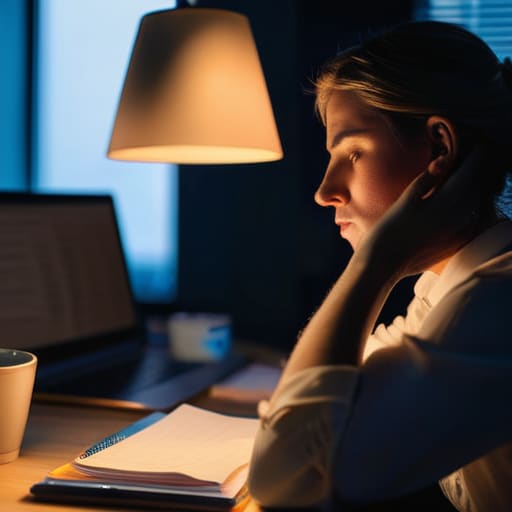
We often treat sleep like a luxury we can trade for an extra hour of scrolling or finishing a project, but that’s a bad deal. In my systems engineering days, I learned that if you run a processor at 100% capacity without any downtime, the whole system eventually glitches. Humans are the same. The sleep deprivation consequences go way beyond just feeling like a zombie the next morning; they hit your cognitive functions hard. We’re talking about brain fog, decision fatigue, and that weird, jittery irritability that makes you snap at your coworkers for no reason.
When you’re chronically underslept, your body loses its ability to handle basic stress. It’s not just about being tired; it’s about your internal hardware failing to reboot. You start seeing a massive decline in your ability to focus, which makes every task take twice as long as it should. It becomes a vicious cycle: you’re too exhausted to be productive, so you stay up late to catch up, which only makes the next day even harder to manage. If you aren’t prioritizing improving sleep quality, you aren’t actually saving time—you’re just borrowing it from your future self at a massive interest rate.
Stop Making Life Harder With Poor Sleep Quality

We often treat sleep like a luxury or something we can just “catch up on” during the weekend, but that’s a massive system error. When you’re constantly running on fumes, you aren’t actually living; you’re just reacting to everything. Your brain’s ability to process information slows down, your decision-making gets shaky, and suddenly, a simple task that should take ten minutes feels like an insurmountable mountain. It’s not just about being tired; it’s about the mental friction that makes every single part of your day feel twice as heavy as it should.
The real problem is that we’re unintentionally sabotaging our own biology. Most of us spend our final waking hours staring at screens, which is basically a direct hit to our melatonin production naturally. By ignoring blue light exposure reduction, we’re sending mixed signals to our brains, telling them it’s high noon when it’s actually midnight. This constant tug-of-war makes it nearly impossible to enter deep, restorative sleep. We need to stop treating our bodies like machines that don’t need maintenance and start building a environment that actually supports the way we’re wired to rest.
Five Low-Effort Systems to Actually Protect Your Sleep
- Stop the midnight scroll. I know, your phone is basically an extension of your hand, but that blue light is a signal to your brain that it’s time to stay awake. Try setting a “digital sunset” 30 minutes before bed. Plug your phone in across the room so you aren’t tempted to reach for it when you can’t sleep.
- Fix your environment, not just your habits. Your bedroom should be a cave: cool, dark, and quiet. If you can’t control the street noise or the sunlight peeking through the blinds, invest in a cheap white noise machine or some blackout curtains. It’s a one-time setup that pays dividends every single night.
- Treat caffeine like a scheduled task, not a constant companion. If you’re still slamming espresso at 4 PM to survive the afternoon slump, you’re sabotaging your 11 PM wind-down. Try to draw a hard line at noon or 2 PM. It’s about managing your chemical inputs so they don’t wreck your system later.
- Build a “brain dump” ritual. Most of my restless nights come from my brain trying to solve engineering problems or work tasks at 2 AM. Keep that physical notebook I mentioned earlier on your nightstand. If a thought starts looping, write it down. Once it’s on paper, your brain feels like it has permission to let go of it for the night.
- Stop trying to “force” sleep. If you’ve been tossing and turning for twenty minutes, get out of bed. Staying there while frustrated just trains your brain to associate your mattress with anxiety. Go sit in a chair in dim light, read something boring, or just breathe until you actually feel heavy-eyed. The bed is for sleep, not for wrestling with your thoughts.
Systems Over Perfection
Look, I’m not asking you to overhaul your entire life overnight or turn your bedroom into some high-tech sensory deprivation tank. We’ve already talked about how much it costs you—mentally and physically—to run on empty, and how much easier things get when you stop fighting your own biology. Whether it’s ditching the phone thirty minutes before bed, keeping your room cool, or just being more intentional about your evening wind-down, the goal is the same: reducing friction. You don’t need a perfect routine; you just need a few reliable systems that make sleep feel like a natural transition rather than a daily struggle.
At the end of the day, your energy is your most valuable currency. If you’re constantly operating in a fog, you’re essentially leaving money, time, and mental clarity on the table. Don’t let the pursuit of a “perfect” sleep schedule become another source of stress that keeps you awake. Just pick one thing from this list and try it for a week. We aren’t aiming for a flawless life; we are just building better habits so you can show up as the best version of yourself. Stop fighting the clock and start optimizing your rest.
Frequently Asked Questions
I've tried all the "standard" advice, so what are some low-effort tweaks that actually move the needle?
Look, if you’ve already tried the “no screens an hour before bed” thing and failed, stop beating yourself up. It’s too high-friction. Instead, try these low-effort swaps: Swap your bright overhead lights for a cheap warm lamp in the evening. Set your phone to grayscale at 9 PM—it makes scrolling feel incredibly boring. And if you can’t do a full routine, just commit to one thing: a consistent wake-up time. Even on weekends. It’s about stability, not perfection.
How do I fix my sleep schedule if my job or lifestyle makes a consistent routine impossible?
Look, if your shift schedule is a mess, stop trying to force a “perfect” 10 PM bedtime. It’s a losing battle. Instead, focus on your “anchor habits.” If you can’t control when you sleep, control the environment and the wind-down. Use blackout curtains, a white noise machine, and a strict 20-minute digital sunset. We’re optimizing for consistency in your rituals, not just the clock. Build a system that works around your chaos.
Is it actually worth investing in expensive gear like blackout curtains or specialized pillows, or is that just marketing noise?
Look, I get the temptation to go down the rabbit hole of $200 pillows and designer blackout curtains. But as an analyst, I look at ROI. If your room is bright because of a streetlamp, blackout curtains are a massive win—that’s a high-leverage fix. But a specialized pillow? That’s a gamble. Start with the cheap stuff first: an eye mask and earplugs. If those don’t move the needle, then—and only then—start spending.
How do I stop my brain from racing the second my head hits the pillow?
I call this the “Midnight Loop,” and honestly, it’s the worst. When my brain starts sprinting the second I hit the pillow, I stop fighting it and grab my physical notebook. I do a quick “brain dump”—just scribbling down every stray thought, task, or worry until my head feels empty. If it’s on paper, my brain feels like it has permission to stop processing it. It’s not perfect, but it works.